Introduction
Proposal Planning Guide is the foundation of every successful proposal. Before a single page is written, proposal teams must establish a clear strategy, assign responsibilities, identify customer requirements, and develop a realistic schedule. Effective proposal planning reduces risks, improves collaboration, and significantly increases the likelihood of submitting a compliant, high-quality proposal on time.
Whether you’re preparing a government RFP response or a commercial business proposal, a structured planning approach helps your team stay organized and focused throughout the proposal lifecycle.
In this guide, you’ll learn how to plan winning proposals, create a proposal schedule, organize resources, manage risks, and establish a repeatable planning process.
Table of Contents
What is Proposal Planning?
Proposal planning is the process of preparing the people, schedule, resources, and strategy required to develop a winning proposal.
Instead of immediately starting proposal writing, successful organizations spend time planning because it helps them:
- Understand customer expectations
- Allocate resources efficiently
- Assign responsibilities
- Build realistic timelines
- Reduce project risks
- Improve proposal quality
Planning is the bridge between the Bid/No-Bid decision and proposal development.
Why Proposal Planning Matters
Organizations that invest in proposal planning experience:
- Better collaboration
- Higher proposal quality
- Reduced rework
- Improved compliance
- Better schedule management
- Fewer last-minute issues
- Increased win rates
Without proper planning, proposal teams often struggle with missed deadlines, inconsistent messaging, and poor coordination.
Proposal Planning Objectives
Every proposal plan should achieve the following objectives:
- Understand customer requirements
- Define proposal strategy
- Establish proposal milestones
- Assign proposal owners
- Identify risks
- Allocate resources
- Create a communication plan
- Schedule proposal reviews
- Ensure on-time submission
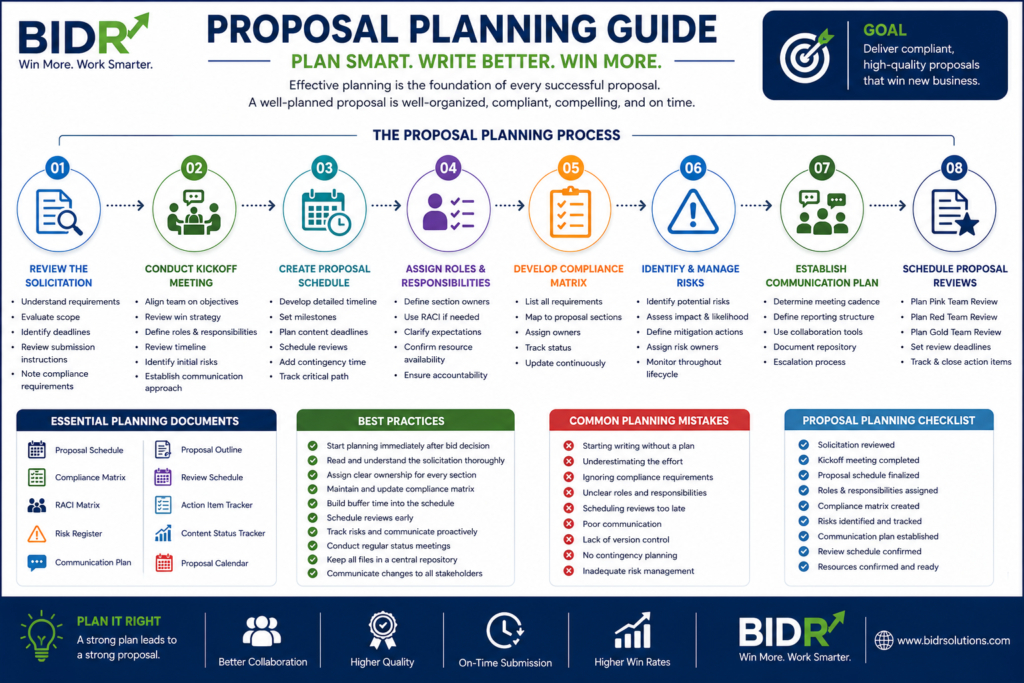
The Proposal Planning Process
A structured planning process typically consists of the following steps.
Step 1: Review the Solicitation
Begin by carefully reviewing the customer’s RFP, RFQ, ITT, or tender documentation.
Focus on:
- Scope of work
- Evaluation criteria
- Submission instructions
- Mandatory requirements
- Deadlines
- Deliverables
- Compliance requirements
Understanding customer expectations early helps prevent costly mistakes later.
Step 2: Conduct a Proposal Kickoff Meeting
The kickoff meeting aligns the proposal team.
Typical agenda:
- Proposal objectives
- Customer overview
- Win strategy
- Proposal schedule
- Team responsibilities
- Review milestones
- Communication plan
- Risks and assumptions
Every contributor should leave the meeting with a clear understanding of their responsibilities.
Step 3: Create a Proposal Schedule
Develop a detailed proposal timeline that includes:
- Content deadlines
- Review dates
- Graphics development
- Pricing milestones
- Production activities
- Final submission date
Always build contingency time into the schedule to accommodate unexpected issues.
Step 4: Assign Roles and Responsibilities
Clearly define ownership for:
- Executive Summary
- Technical Solution
- Project Management
- Staffing
- Pricing
- Quality Assurance
- Graphics
- Compliance Matrix
- Proposal Reviews
Assigning clear accountability helps avoid confusion and delays.
Step 5: Develop a Compliance Matrix
The compliance matrix maps every customer requirement to the appropriate proposal section and owner.
It should include:
- Requirement ID
- Requirement description
- Proposal section
- Content owner
- Status
- Reviewer
- Comments
This document serves as the proposal team’s primary tracking tool.
Step 6: Identify Risks
Common proposal risks include:
- Limited SME availability
- Tight deadlines
- Pricing delays
- Changing requirements
- Resource conflicts
- Technical uncertainties
Document each risk along with mitigation actions and owners.
Step 7: Establish Communication Plans
Effective communication is essential for proposal success.
Determine:
- Meeting frequency
- Status reporting
- Escalation process
- Document repository
- Collaboration platform
- Version control approach
A clear communication plan minimizes misunderstandings.
Step 8: Schedule Proposal Reviews
Plan formal review milestones such as:
Pink Team Review
Early validation of proposal direction and compliance.
Red Team Review
Customer-focused review of proposal quality and competitiveness.
Gold Team Review
Executive review of pricing, risk, and final approval.
Scheduling reviews early prevents delays near the submission deadline.
Essential Proposal Planning Documents
A well-managed proposal typically includes:
- Proposal Schedule
- Compliance Matrix
- Responsibility Assignment Matrix (RACI)
- Proposal Calendar
- Risk Register
- Communication Plan
- Proposal Outline
- Review Schedule
- Action Item Tracker
- Content Status Tracker
These documents improve visibility and accountability across the proposal team.
Proposal Planning Best Practices
- Start planning immediately after the Bid/No-Bid decision.
- Read the solicitation thoroughly before assigning work.
- Assign clear ownership for every proposal section.
- Maintain a living compliance matrix.
- Build buffer time into the proposal schedule.
- Schedule reviews early.
- Track risks throughout the proposal lifecycle.
- Conduct regular status meetings.
- Keep all proposal files in a centralized repository.
- Communicate changes promptly to all stakeholders.
Common Proposal Planning Mistakes
Avoid these common mistakes:
- Starting proposal writing without a plan
- Underestimating effort
- Ignoring compliance requirements
- Assigning unclear responsibilities
- Scheduling reviews too late
- Poor communication
- Lack of version control
- No contingency planning
- Inadequate risk management
Proposal Planning Checklist
Before moving to proposal writing, confirm that you have:
- Reviewed all solicitation documents
- Conducted a kickoff meeting
- Finalized the proposal schedule
- Assigned section owners
- Created a compliance matrix
- Identified major risks
- Established communication protocols
- Scheduled proposal reviews
- Confirmed resource availability
Conclusion
Effective proposal planning sets the stage for proposal success. By investing time in reviewing requirements, organizing resources, assigning responsibilities, identifying risks, and establishing a realistic schedule, proposal teams can improve collaboration, maintain compliance, and submit stronger proposals with confidence.
Organizations that follow a standardized proposal planning process are better positioned to deliver winning proposals consistently and efficiently.
Related Articles
- Complete Guide to Proposal Management
- Proposal Management Process
- Proposal Manager Roles and Responsibilities
- Proposal Kickoff Meeting Checklist
- Proposal Writing Best Practices
- Proposal Review Process
- Proposal Submission Checklist
- Proposal Governance Framework
- Complete Guide to Bid Management
Frequently Asked Questions (FAQs)
What is proposal planning?
Proposal planning is the structured process of organizing the people, schedule, resources, and strategy needed to develop a compliant, high-quality proposal.
Why is proposal planning important?
It improves coordination, reduces risks, ensures compliance, and helps teams deliver proposals on time.
What documents are created during proposal planning?
Common planning documents include the proposal schedule, compliance matrix, risk register, communication plan, proposal outline, and review schedule.
When should proposal planning begin?
Planning should begin immediately after the Bid/No-Bid decision and before proposal writing starts.