Introduction
Proposal Kickoff Meeting Checklist is one of the most valuable tools for proposal teams because it ensures everyone starts the proposal with a clear understanding of customer requirements, timelines, responsibilities, and win strategy. A well-organized kickoff meeting aligns stakeholders, minimizes confusion, and sets the foundation for a compliant, high-quality proposal.
Whether you’re responding to a government RFP, enterprise proposal, or commercial tender, using a structured kickoff meeting checklist helps your team stay organized and reduces the risk of costly mistakes later in the proposal lifecycle.
This guide explains how to prepare for a proposal kickoff meeting, what topics to cover, who should attend, and provides a practical checklist you can use for every proposal.
Table of Contents
What is a Proposal Kickoff Meeting?
A proposal kickoff meeting is the formal meeting held immediately after the Bid/No-Bid decision. It brings together everyone involved in proposal development to review customer requirements, define objectives, assign responsibilities, establish timelines, and agree on the proposal strategy.
The kickoff meeting creates alignment across sales, proposal management, solution architects, subject matter experts (SMEs), pricing, legal, and executive stakeholders.
Why Proposal Kickoff Meetings Matter
A successful kickoff meeting helps teams:
- Understand customer expectations
- Clarify proposal objectives
- Assign ownership
- Review the proposal schedule
- Discuss win themes
- Identify proposal risks
- Improve communication
- Reduce last-minute surprises
- Increase proposal quality
Teams that skip kickoff meetings often experience confusion, duplicated effort, and missed deadlines.
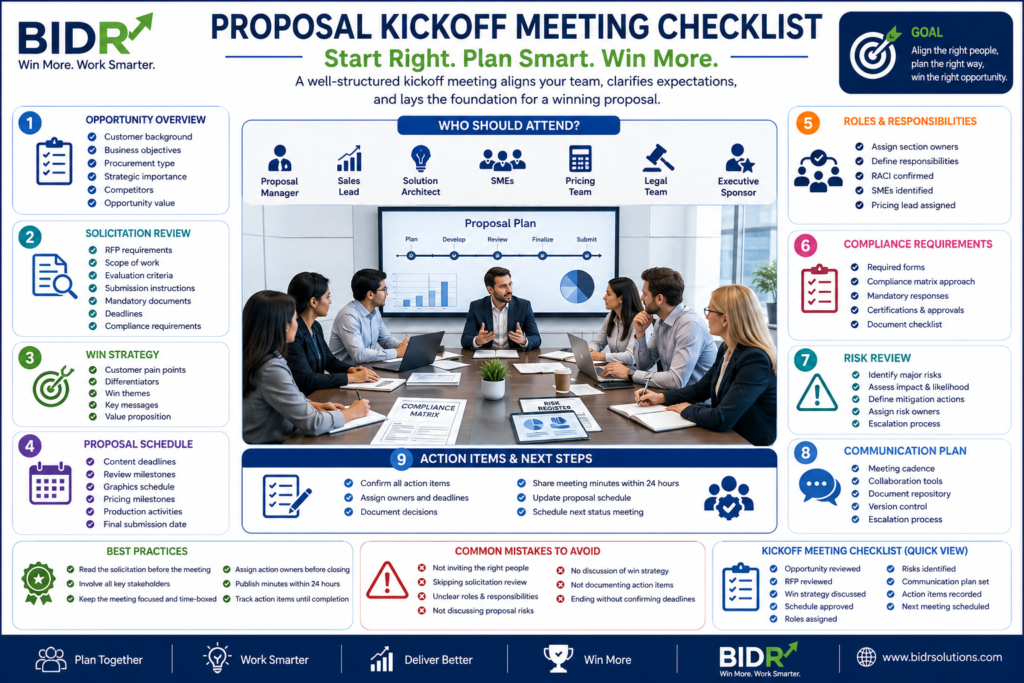
Who Should Attend?
The attendees depend on the complexity of the proposal, but typically include:
Proposal Manager
- Facilitates the meeting
- Reviews the proposal plan
- Assigns action items
Sales Lead
- Provides customer background
- Explains opportunity strategy
- Shares competitive insights
Solution Architect
- Reviews the proposed technical solution
- Identifies technical risks
Subject Matter Experts (SMEs)
- Confirm technical responsibilities
- Estimate content effort
Pricing Team
- Discusses pricing strategy
- Reviews pricing timelines
Legal Team
- Reviews contractual requirements
- Identifies legal risks
Executive Sponsor
- Confirms pursuit strategy
- Provides executive direction
Proposal Kickoff Meeting Agenda
A standard kickoff meeting should include the following agenda.
1. Welcome and Introductions
- Introduce participants
- Define meeting objectives
- Review agenda
2. Opportunity Overview
Discuss:
- Customer background
- Business objectives
- Procurement type
- Strategic importance
- Competitors
- Opportunity value
3. Review the Solicitation
Walk through:
- RFP requirements
- Scope of work
- Evaluation criteria
- Submission instructions
- Mandatory documents
- Deadlines
- Compliance requirements
4. Discuss the Win Strategy
Review:
- Customer pain points
- Differentiators
- Win themes
- Key messages
- Value proposition
5. Review the Proposal Schedule
Present:
- Writing deadlines
- Review milestones
- Graphics schedule
- Pricing milestones
- Production activities
- Final submission date
Confirm that every contributor understands the timeline.
6. Assign Roles and Responsibilities
Clearly assign owners for:
- Executive Summary
- Technical Solution
- Staffing
- Project Management
- Pricing
- Graphics
- Compliance Matrix
- Proposal Reviews
Document every assignment.
7. Review Risks
Discuss potential issues such as:
- Resource availability
- Technical challenges
- Pricing delays
- Customer amendments
- Schedule conflicts
- Compliance concerns
Assign owners for risk mitigation.
8. Review Communication Plan
Agree on:
- Status meetings
- Collaboration tools
- Document repository
- Escalation process
- Version control
- Action item tracking
9. Action Items
Before ending the meeting:
- Confirm all assignments
- Review deadlines
- Document decisions
- Schedule follow-up meetings
Proposal Kickoff Meeting Checklist
Use this checklist before closing the meeting.
Opportunity
- Customer overview discussed
- Opportunity objectives reviewed
- Competitor information shared
Requirements
- RFP reviewed
- Scope confirmed
- Evaluation criteria discussed
- Submission instructions reviewed
- Compliance requirements identified
Planning
- Proposal schedule approved
- Milestones confirmed
- Review dates scheduled
Team
- Roles assigned
- Section owners confirmed
- SMEs identified
- Pricing lead assigned
Proposal Strategy
- Win themes agreed
- Differentiators documented
- Customer priorities reviewed
Risks
- Major risks identified
- Mitigation actions assigned
- Escalation process defined
Communication
- Collaboration platform selected
- Status meeting cadence agreed
- Document repository confirmed
Closing
- Action items recorded
- Deadlines confirmed
- Next meeting scheduled
Proposal Kickoff Meeting Best Practices
- Read the solicitation before the meeting.
- Invite all key stakeholders.
- Keep the meeting focused on execution.
- Assign action owners before ending the meeting.
- Publish meeting minutes within 24 hours.
- Update the proposal schedule immediately after the meeting.
- Track action items throughout the proposal lifecycle.
Common Kickoff Meeting Mistakes
Avoid these common issues:
- Inviting only part of the proposal team
- Failing to review customer requirements
- Leaving responsibilities unclear
- Ignoring proposal risks
- Not documenting action items
- Skipping discussion of win themes
- Ending without confirming deadlines
Conclusion
A structured proposal kickoff meeting is the first major step toward developing a successful proposal. By bringing the right stakeholders together, reviewing customer requirements, assigning clear responsibilities, and establishing a realistic plan, proposal teams can reduce risk, improve collaboration, and deliver stronger, more competitive proposals.
Using a standardized Proposal Kickoff Meeting Checklist ensures consistency across every pursuit and lays the foundation for winning business.
Related Articles
- Complete Guide to Proposal Management
- Proposal Management Process
- Proposal Planning Guide
- Proposal Manager Roles and Responsibilities
- Proposal Writing Best Practices
- Proposal Review Process
- Proposal Submission Checklist
- Proposal Governance Framework
- Complete Guide to Bid Management
Frequently Asked Questions (FAQs)
When should a proposal kickoff meeting be held?
Immediately after the Bid/No-Bid decision and before proposal writing begins.
How long should a kickoff meeting last?
Typically between 60 and 90 minutes, depending on the complexity of the proposal.
Who leads the kickoff meeting?
The Proposal Manager usually facilitates the meeting, with input from the Sales Lead and Solution Architect.
What is the outcome of a kickoff meeting?
A shared understanding of customer requirements, proposal strategy, responsibilities, schedule, risks, and next steps.
Who should attend a proposal kickoff meeting?
Typical attendees include the Proposal Manager, Sales Lead, Solution Architect, Subject Matter Experts (SMEs), Pricing Team, Legal Team, and Executive Sponsor.
What should be discussed during a kickoff meeting?
Key topics include the opportunity overview, solicitation review, proposal schedule, win strategy, compliance requirements, team assignments, risks, communication plan, and action items.
How long should a proposal kickoff meeting last?
Most kickoff meetings last between 60 and 90 minutes, depending on the complexity of the opportunity and the number of stakeholders involved.