Introduction
Proposal Review Process is a critical quality assurance activity that ensures business proposals are accurate, compliant, persuasive, and ready for submission. Even the strongest proposal can lose valuable evaluation points if it contains inconsistencies, compliance gaps, or unclear messaging.
A structured proposal review process helps organizations identify issues early, improve proposal quality, strengthen customer-focused messaging, and reduce the risk of costly mistakes before submission.
This guide explains the proposal review process, review stages, review teams, best practices, common mistakes, and a practical checklist that proposal professionals can use to improve proposal quality.
Table of Contents
What is the Proposal Review Process?
The Proposal Review Process is a structured series of quality reviews conducted during proposal development to evaluate compliance, technical accuracy, customer focus, readability, consistency, and overall competitiveness before submission.
Rather than waiting until the proposal is complete, successful organizations conduct multiple review cycles throughout the proposal lifecycle to identify issues early and continuously improve proposal quality.
The primary objectives are to:
- Verify compliance with customer requirements
- Improve proposal quality
- Strengthen customer-focused messaging
- Identify technical gaps
- Ensure pricing consistency
- Reduce submission risks
- Increase proposal win rates
Why Proposal Reviews Matter
A disciplined review process helps organizations:
- Improve evaluator experience
- Eliminate inconsistencies
- Identify compliance gaps
- Strengthen win themes
- Improve proposal readability
- Reduce rework
- Increase customer confidence
- Submit higher-quality proposals
Skipping reviews often leads to avoidable mistakes that can negatively affect proposal evaluation scores.
Types of Proposal Reviews
Proposal reviews are typically conducted in multiple stages.
1. Compliance Review
Purpose:
- Verify every customer requirement has been addressed.
- Validate mandatory documents.
- Confirm page limits and formatting requirements.
- Review submission instructions.
This review helps prevent proposal disqualification due to non-compliance.
2. Pink Team Review
The Pink Team Review is the first formal review.
Objectives:
- Evaluate proposal direction
- Confirm customer alignment
- Review proposal outline
- Assess content completeness
- Identify major gaps
This review focuses on improving proposal development while there is still sufficient time to make changes.
3. Red Team Review
The Red Team Review evaluates the proposal from the customer’s perspective.
Reviewers assess:
- Persuasiveness
- Customer focus
- Proposal organization
- Win themes
- Differentiators
- Technical solution
- Readability
The Red Team Review is often considered the most valuable quality review.
4. Gold Team Review
The Gold Team Review is an executive-level review conducted before submission.
Focus areas include:
- Business strategy
- Proposal quality
- Pricing
- Risk assessment
- Executive approval
- Final decision
Only proposals meeting organizational standards should proceed to submission.
5. White Glove Review (Optional)
Some organizations conduct a final editorial review that checks:
- Grammar
- Spelling
- Formatting
- Hyperlinks
- Graphics
- Page numbering
- Table of Contents
- Branding consistency
This review prepares the proposal for production.
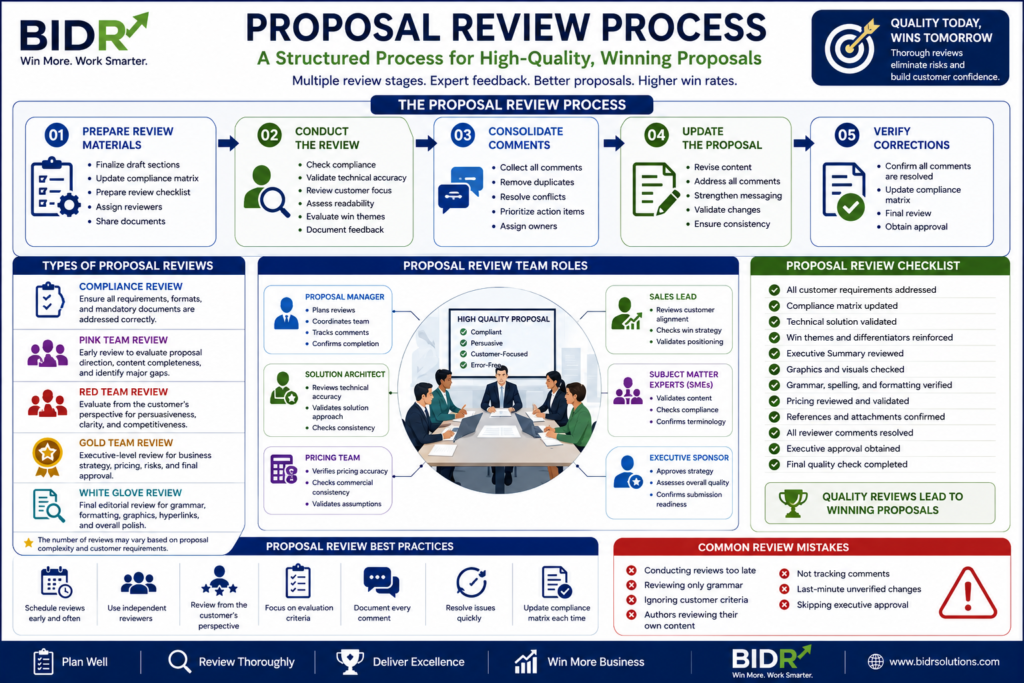
Proposal Review Process
A typical review workflow includes the following stages.
Step 1: Prepare Review Materials
Before the review:
- Finalize draft sections
- Update the compliance matrix
- Prepare review checklists
- Assign reviewers
- Share proposal documents
Step 2: Conduct the Review
Reviewers evaluate:
- Compliance
- Technical accuracy
- Customer focus
- Proposal structure
- Graphics
- Readability
- Pricing alignment
- Supporting evidence
Feedback should be objective, actionable, and documented.
Step 3: Consolidate Comments
The Proposal Manager collects comments from all reviewers.
Activities include:
- Remove duplicate comments
- Resolve conflicting feedback
- Prioritize action items
- Assign owners
Step 4: Update the Proposal
Proposal contributors revise content based on reviewer feedback.
Every major change should be validated before moving to the next review stage.
Step 5: Verify Corrections
Before closing the review:
- Confirm all comments are resolved
- Update the compliance matrix
- Review revised sections
- Obtain reviewer approval
Proposal Review Team Roles
Proposal Manager
- Plans review sessions
- Coordinates reviewers
- Tracks comments
- Confirms completion
Sales Lead
Reviews:
- Customer alignment
- Win strategy
- Competitive positioning
Solution Architect
Reviews:
- Technical accuracy
- Solution feasibility
- Architecture consistency
Subject Matter Experts (SMEs)
Validate:
- Technical responses
- Compliance
- Industry terminology
Pricing Team
Verifies:
- Cost accuracy
- Commercial consistency
- Pricing assumptions
Executive Sponsor
Approves:
- Business strategy
- Overall proposal quality
- Submission readiness
Proposal Review Best Practices
- Schedule reviews early in the proposal timeline.
- Use independent reviewers whenever possible.
- Review from the customer’s perspective.
- Focus on evaluation criteria.
- Document every review comment.
- Resolve conflicting feedback quickly.
- Update the compliance matrix after every review.
- Verify all comments before submission.
Common Proposal Review Mistakes
Avoid these common issues:
- Conducting reviews too late
- Reviewing only grammar
- Ignoring customer evaluation criteria
- Allowing authors to review only their own sections
- Failing to track review comments
- Making unverified last-minute changes
- Skipping executive approval
Proposal Review Checklist
Before approving the proposal, verify:
- Customer requirements addressed
- Compliance matrix updated
- Technical solution validated
- Win themes reinforced
- Executive Summary reviewed
- Graphics checked
- Grammar and spelling verified
- Pricing validated
- Reviewer comments resolved
- Executive approval obtained
Conclusion
A structured Proposal Review Process is essential for producing high-quality, compliant, and competitive business proposals. By conducting multiple review stages, incorporating cross-functional feedback, and resolving issues before submission, organizations can significantly improve proposal quality and increase their chances of winning contracts.
Related Articles
- Complete Guide to Proposal Management
- Proposal Management Process
- Proposal Planning Guide
- Proposal Writing Best Practices
- Proposal Kickoff Meeting Checklist
- Proposal Manager Roles and Responsibilities
- Proposal Submission Checklist
- Proposal Governance Framework
- Complete Guide to Bid Management
Frequently Asked Questions (FAQs)
What is the Proposal Review Process?
It is a structured quality assurance process used to evaluate proposal compliance, technical accuracy, customer focus, readability, and overall competitiveness before submission.
What is the purpose of a Red Team Review?
A Red Team Review evaluates the proposal from the customer’s perspective and identifies opportunities to improve clarity, persuasiveness, and competitiveness.
How many proposal reviews should be conducted?
Most organizations perform at least three formal reviews: Pink Team, Red Team, and Gold Team. Large government proposals may also include compliance and White Glove reviews.
Who should participate in proposal reviews?
Proposal Managers, Sales Leads, Solution Architects, SMEs, Pricing Teams, Legal representatives, and Executive Sponsors should participate based on the review stage.
What is the purpose of a Gold Team Review?
A Gold Team Review provides executive approval by evaluating business strategy, pricing, proposal quality, and submission readiness before the proposal is submitted.
Why are proposal reviews important?
Proposal reviews identify gaps, improve readability, strengthen customer-focused messaging, verify compliance, and reduce the risk of submitting incomplete or inaccurate proposals.