Introduction
Proposal Lessons Learned Template is an essential tool for organizations that want to continuously improve their proposal development process. Every proposal—whether won or lost—provides valuable insights into what worked well, what challenges were encountered, and what can be improved for future pursuits.
Without documenting lessons learned, proposal teams often repeat the same mistakes, lose valuable organizational knowledge, and miss opportunities to improve proposal quality and win rates.
In this guide, you’ll learn how to conduct effective lessons learned sessions, what information to capture, and how to use a practical template to strengthen future proposals.
Table of Contents
What is a Proposal Lessons Learned Template?
A Proposal Lessons Learned Template is a structured document used to capture observations, successes, challenges, recommendations, and improvement opportunities after completing a proposal.
The template helps organizations document knowledge that can be reused in future proposals and supports continuous process improvement.
Typical objectives include:
- Improve proposal quality
- Reduce recurring issues
- Capture reusable content
- Improve proposal planning
- Strengthen governance
- Increase proposal win rates
Why Lessons Learned Matter
Organizations that consistently capture lessons learned can:
- Improve proposal efficiency
- Enhance collaboration
- Reduce proposal risks
- Strengthen proposal quality
- Improve customer satisfaction
- Build organizational knowledge
- Increase proposal win rates
Lessons learned convert experience into repeatable best practices.
When Should Lessons Learned Be Conducted?
Conduct a lessons learned session:
- After proposal submission
- After contract award
- After proposal rejection
- Following major proposal milestones
- At the end of large proposal projects
Don’t wait several weeks—schedule the session while information is still fresh.
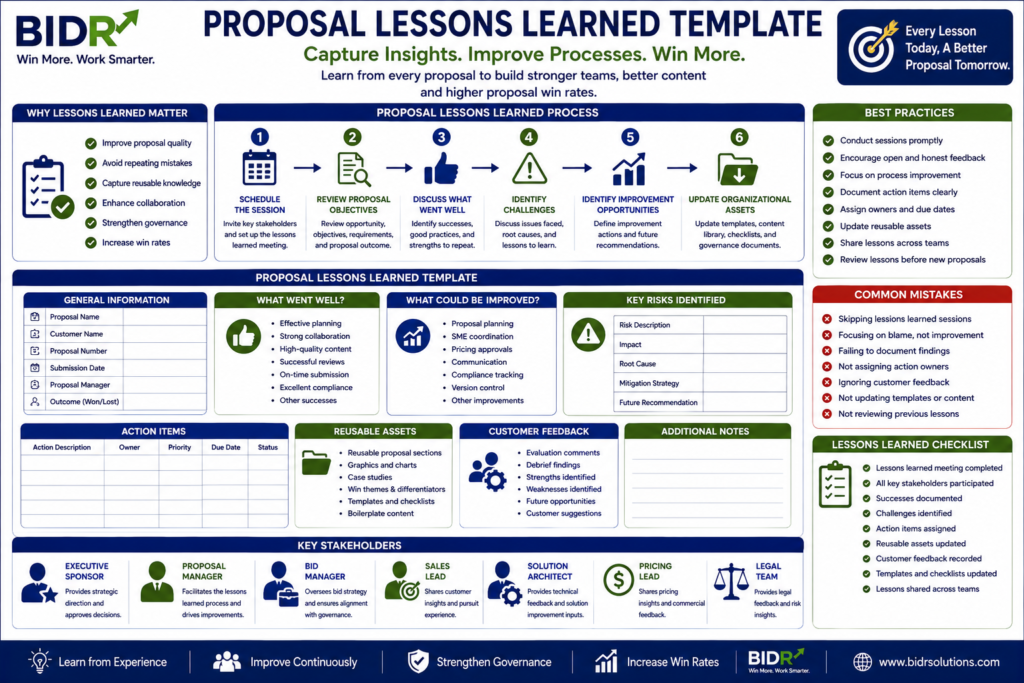
Proposal Lessons Learned Process
Step 1: Schedule the Session
Invite all key stakeholders:
- Proposal Manager
- Bid Manager
- Sales Lead
- Solution Architect
- Pricing Lead
- SMEs
- Executive Sponsor
Schedule the meeting within one to two weeks of proposal submission or award notification.
Step 2: Review Proposal Objectives
Begin by reviewing:
- Opportunity overview
- Proposal objectives
- Customer requirements
- Submission timeline
- Proposal outcome
This ensures everyone has the same context.
Step 3: Discuss What Went Well
Examples include:
- Effective planning
- Strong collaboration
- Successful proposal reviews
- Customer-focused messaging
- On-time submission
- High-quality graphics
- Effective compliance management
Celebrate successes and identify practices worth repeating.
Step 4: Identify Challenges
Discuss issues such as:
- Resource constraints
- Late SME responses
- Pricing delays
- Compliance gaps
- Schedule pressure
- Version control issues
- Communication challenges
Focus on identifying root causes rather than assigning blame.
Step 5: Identify Improvement Opportunities
Discuss:
- Process improvements
- Better templates
- New checklists
- Improved planning
- Enhanced communication
- Additional training
- Automation opportunities
Assign owners for implementing improvements.
Step 6: Update Organizational Assets
Capture reusable knowledge by updating:
- Proposal templates
- Content library
- Compliance matrix
- Checklists
- Best practices
- Governance documents
This ensures future proposal teams benefit from previous experience.
Proposal Lessons Learned Template
General Information
- Proposal Name
- Customer Name
- Proposal Number
- Submission Date
- Proposal Manager
- Outcome (Won/Lost)
What Went Well?
Examples:
- Strong kickoff meeting
- Effective proposal planning
- High-quality Executive Summary
- Excellent collaboration
- Successful reviews
- Early submission
What Could Be Improved?
Examples:
- Improve proposal schedule
- Better SME coordination
- Faster pricing approvals
- Enhanced communication
- Stronger compliance tracking
- Better version control
Key Risks Identified
Document:
- Risk description
- Impact
- Root cause
- Mitigation strategy
- Future recommendation
Action Items
For each improvement:
- Action description
- Owner
- Priority
- Due date
- Status
Reusable Assets
Identify content that can be reused:
- Proposal sections
- Graphics
- Case studies
- Win themes
- Templates
- Boilerplate content
Customer Feedback
Capture:
- Evaluation comments
- Debrief findings
- Strengths identified
- Weaknesses identified
- Future opportunities
Proposal Lessons Learned Best Practices
- Conduct the session promptly.
- Encourage honest discussion.
- Focus on process improvement.
- Document action items clearly.
- Assign owners for improvements.
- Update reusable content libraries.
- Share lessons across proposal teams.
- Review previous lessons before starting new proposals.
Common Mistakes
Avoid these mistakes:
- Skipping lessons learned sessions
- Focusing on blame instead of improvement
- Failing to document findings
- Not assigning action owners
- Ignoring customer feedback
- Never updating templates
- Not reviewing previous lessons
Proposal Lessons Learned Checklist
Before closing the proposal project, verify:
- Lessons learned meeting completed
- All stakeholders participated
- Successes documented
- Challenges identified
- Action items assigned
- Reusable assets updated
- Customer feedback recorded
- Templates updated
- Knowledge shared
Conclusion
Every proposal provides valuable learning opportunities. By using a structured Proposal Lessons Learned Template, organizations can capture institutional knowledge, improve proposal processes, strengthen governance, and continuously increase proposal success rates.
Organizations that learn from every proposal build stronger teams, develop better content, and consistently deliver higher-quality proposals over time.
Related Articles
- Complete Guide to Proposal Management
- Proposal Governance Framework
- Proposal Submission Checklist
- Proposal Review Process
- Proposal Writing Best Practices
- Proposal Planning Guide
- Proposal Management Process
- Proposal Manager Roles and Responsibilities
- Complete Guide to Bid Management
Frequently Asked Questions (FAQs)
What is a Proposal Lessons Learned Template?
A Proposal Lessons Learned Template is a structured document used to record successes, challenges, recommendations, and improvement opportunities after completing a proposal.
Why are lessons learned important?
They help organizations improve proposal quality, avoid repeating mistakes, strengthen collaboration, and increase future proposal win rates.
Who should participate in lessons learned sessions?
Proposal Managers, Bid Managers, Sales Leads, Solution Architects, SMEs, Pricing Teams, and Executive Sponsors should contribute.
When should lessons learned be documented?
Ideally within one to two weeks after proposal submission, award notification, or customer debrief.