Introduction
Proposal Governance Framework provides the structure, policies, decision-making processes, and accountability needed to manage business proposals consistently and effectively. As proposal teams grow and pursue larger, more complex opportunities, governance becomes essential for maintaining quality, ensuring compliance, managing risks, and improving win rates.
A well-defined governance framework establishes clear roles, approval workflows, review gates, communication standards, and performance metrics throughout the proposal lifecycle.
In this guide, you’ll learn the key components of a proposal governance framework, governance roles, approval processes, best practices, and how organizations can implement effective proposal governance.
Table of Contents
What is a Proposal Governance Framework?
A Proposal Governance Framework is a structured set of policies, processes, roles, responsibilities, and decision-making controls that guide proposal development from opportunity identification through submission and post-submission review.
The framework ensures that proposal activities follow standardized procedures while maintaining quality, compliance, accountability, and strategic alignment.
Typical governance objectives include:
- Standardizing proposal development
- Improving decision-making
- Ensuring compliance
- Managing proposal risks
- Strengthening accountability
- Supporting continuous improvement
Why Proposal Governance Matters
Organizations with strong proposal governance typically achieve:
- Higher proposal quality
- Better compliance
- Improved collaboration
- Faster decision-making
- Reduced proposal risks
- Better resource utilization
- Consistent proposal standards
- Higher proposal win rates
Without governance, proposal teams often struggle with inconsistent processes, unclear responsibilities, approval delays, and avoidable errors.
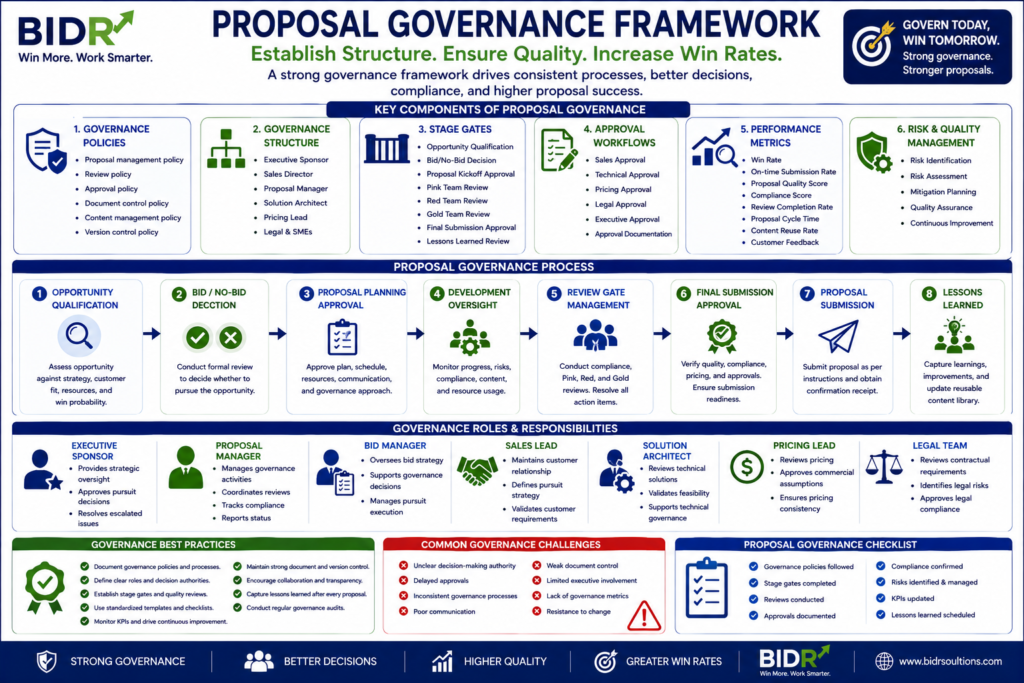
Key Components of a Proposal Governance Framework
1. Governance Policies
Policies define how proposals are managed across the organization.
Examples include:
- Proposal management policy
- Review policy
- Approval policy
- Document control policy
- Content management policy
- Version control policy
2. Governance Structure
A governance structure defines reporting relationships and decision-making authority.
Typical stakeholders include:
- Executive Sponsor
- Sales Director
- Proposal Manager
- Bid Manager
- Solution Architect
- Pricing Lead
- Legal Team
- Subject Matter Experts (SMEs)
Each role should have clearly defined responsibilities.
3. Stage Gates
Governance stage gates ensure that proposals meet predefined quality standards before progressing.
Common stage gates include:
- Opportunity Qualification
- Bid/No-Bid Decision
- Proposal Kickoff Approval
- Pink Team Review
- Red Team Review
- Gold Team Review
- Final Submission Approval
- Lessons Learned Review
These checkpoints reduce risk and improve quality.
4. Approval Workflows
Every proposal should follow a documented approval process.
Typical approvals include:
- Sales approval
- Technical approval
- Pricing approval
- Legal approval
- Executive approval
Approval records should be maintained for governance and audit purposes.
5. Performance Metrics
Organizations should monitor proposal performance using key performance indicators (KPIs).
Examples include:
- Proposal win rate
- On-time submission rate
- Proposal quality score
- Compliance score
- Review completion rate
- Proposal cycle time
- Reuse of approved content
- Customer feedback
Regular KPI reviews help identify opportunities for improvement.
Proposal Governance Process
Step 1: Opportunity Qualification
Assess the opportunity against strategic objectives, customer fit, available resources, and win probability.
Step 2: Bid/No-Bid Decision
Conduct a formal review to determine whether the organization should pursue the opportunity.
Step 3: Proposal Planning Approval
Approve the proposal plan, schedule, resources, communication plan, and governance approach.
Step 4: Proposal Development Oversight
Monitor progress through:
- Weekly status meetings
- Risk reviews
- Compliance tracking
- Content reviews
- Resource management
Step 5: Review Gate Management
Conduct structured reviews at predefined milestones:
- Compliance Review
- Pink Team Review
- Red Team Review
- Gold Team Review
Ensure action items are resolved before progressing.
Step 6: Final Submission Approval
Before submission, verify:
- Proposal quality
- Compliance
- Pricing
- Executive approvals
- Submission readiness
Only approved proposals should proceed to submission.
Step 7: Lessons Learned
After submission, conduct a governance review to capture:
- Successes
- Challenges
- Process improvements
- Reusable content
- Action items
Continuous improvement is a key objective of governance.
Governance Roles and Responsibilities
Executive Sponsor
- Provides strategic oversight
- Approves pursuit decisions
- Resolves escalated issues
Proposal Manager
- Manages proposal governance activities
- Coordinates reviews
- Tracks governance compliance
- Reports proposal status
Bid Manager
- Oversees bid strategy
- Supports governance decisions
- Manages pursuit execution
Sales Lead
- Maintains customer relationship
- Defines pursuit strategy
- Validates customer requirements
Solution Architect
- Reviews technical solutions
- Validates feasibility
- Supports technical governance
Pricing Lead
- Reviews pricing
- Approves commercial assumptions
- Ensures pricing consistency
Legal Team
- Reviews contractual requirements
- Identifies legal risks
- Approves legal compliance
Proposal Governance Best Practices
- Document governance policies.
- Define clear approval authorities.
- Establish stage-gate reviews.
- Standardize templates and checklists.
- Monitor governance KPIs.
- Maintain version control.
- Capture lessons learned after every proposal.
- Conduct regular governance audits.
Common Governance Challenges
Avoid these common issues:
- Unclear decision-making authority
- Delayed approvals
- Inconsistent review processes
- Poor communication
- Weak document control
- Limited executive involvement
- Lack of governance metrics
Proposal Governance Checklist
Before closing a proposal, verify:
- Governance policies followed
- Stage gates completed
- Reviews conducted
- Approvals documented
- Compliance confirmed
- Risks managed
- KPIs updated
- Lessons learned scheduled
Conclusion
A well-designed Proposal Governance Framework provides the structure needed to deliver high-quality, compliant, and strategically aligned proposals. By establishing clear roles, standardized processes, governance checkpoints, and measurable performance indicators, organizations can improve collaboration, reduce proposal risk, and consistently increase their proposal win rates.
Related Articles
- Complete Guide to Proposal Management
- Proposal Management Process
- Proposal Planning Guide
- Proposal Review Process
- Proposal Submission Checklist
- Proposal Manager Roles and Responsibilities
- Proposal Writing Best Practices
- Complete Guide to Bid Management
Frequently Asked Questions (FAQs)
What is a Proposal Governance Framework?
A Proposal Governance Framework is a structured system of policies, roles, review gates, approval workflows, and performance measures used to manage proposals consistently and effectively.
Why is proposal governance important?
It improves proposal quality, ensures compliance, reduces risks, strengthens accountability, and increases proposal win rates.
Who is responsible for proposal governance?
Proposal governance is typically shared among Executive Sponsors, Proposal Managers, Bid Managers, Sales Leaders, Solution Architects, Pricing Teams, and Legal stakeholders.
What are governance stage gates?
Stage gates are formal approval checkpoints that ensure proposal quality and readiness before progressing to the next phase.
What metrics should organizations monitor?
Organizations should track proposal win rate, on-time submission rate, compliance score, proposal cycle time, review completion rate, proposal quality score, and customer feedback.